








There is a certain stage in decorating a living room when everything is technically there, yet the room still feels unfinished.
The sofa is in place. The rug works. The coffee table looks good. But the television sits on a bulky unit, cables gather in the corner and every small device seems to need its own shelf, plug or hiding place.
This is exactly why bespoke media walls have become such a popular feature in fitted living spaces. They do not simply provide somewhere to mount a television. A well-designed media wall can bring storage, lighting, display space and entertainment together in a way that makes the entire room feel calmer and more considered.

More Than a Wall for the Television
The name “media wall” can make the idea sound more technical than it really is.
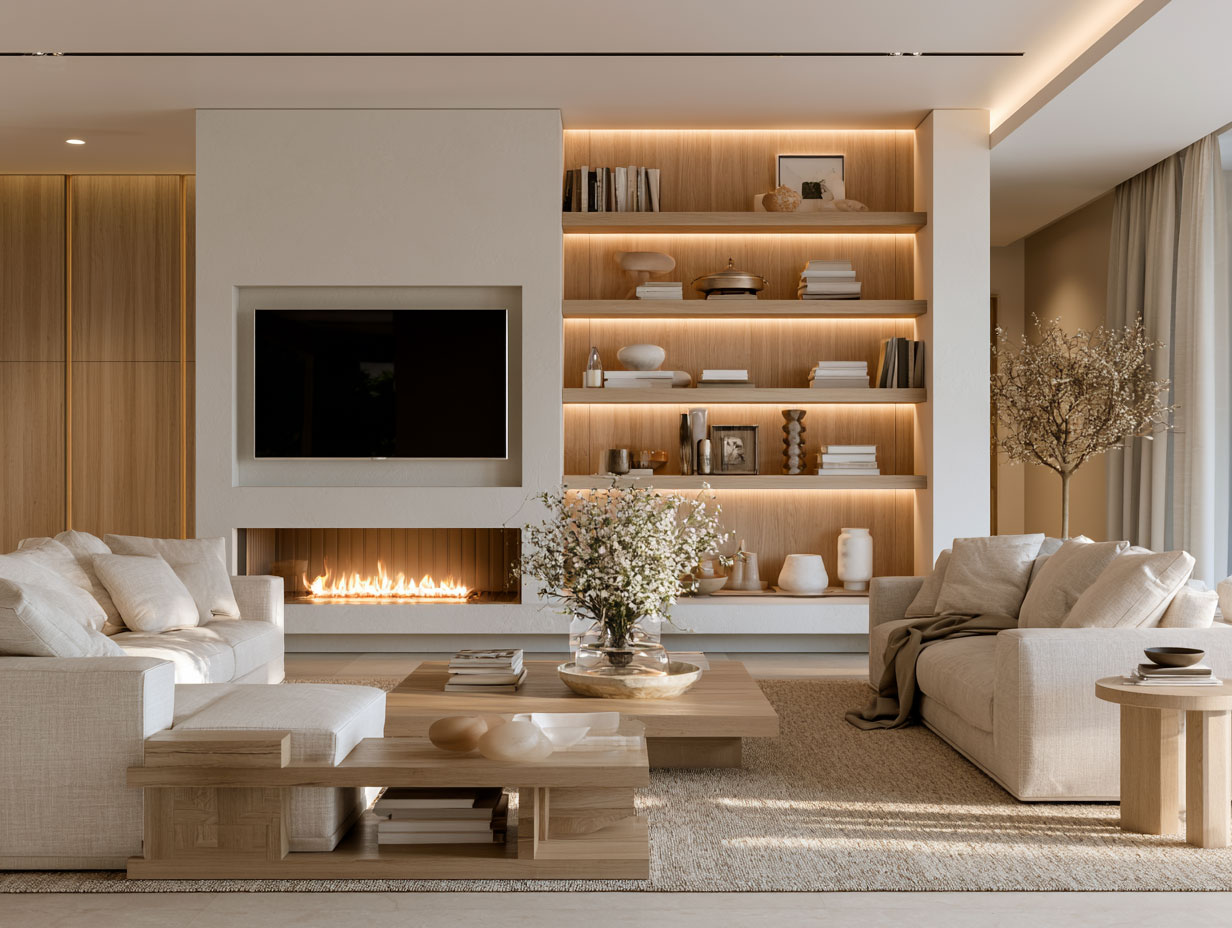
At its simplest, it is a fitted structure built around a television. It may include cupboards, shelving, speakers, lighting or an electric fire. Some designs are sleek and understated, while others are made to become the main feature of the room.
The real appeal is not the television itself. It is the way everything around it is organised.
Instead of having a TV stand, separate shelves, storage baskets and visible wires, the room gains one unified feature that serves several purposes at once.
It Brings Order to Everyday Clutter
Living rooms naturally collect things.
Remote controls, chargers, games consoles, books, toys, candles and paperwork all seem to find their way into the space. Even a beautifully decorated room can quickly feel messy when there is nowhere obvious to put them.
A media wall creates storage exactly where it is needed. Closed cupboards can hide the less attractive essentials, while open shelving gives favourite books, photographs or decorative objects somewhere to shine.
The best designs balance both. Too much open shelving can feel busy, while a completely closed wall can look heavy. A thoughtful mix keeps the space practical without making it feel like a bank of storage units.
There is also something satisfying about having a proper place for everything. When clutter can be cleared in minutes, the living room becomes much easier to relax in.
It Makes Awkward Spaces Useful
Not every living room comes with a large, perfectly flat wall.
Many homes have alcoves, chimney breasts, uneven corners or narrow spaces that are difficult to furnish. Standard furniture often leaves gaps, blocks walkways or never quite looks as though it belongs.
Fitted furniture solves this by working with the shape of the room rather than fighting against it.
A media wall can stretch neatly across alcoves, wrap around structural features or make use of the full height of the wall. In a smaller room, this can be especially valuable because storage is built upwards instead of spreading across the floor.
Those awkward areas that once felt wasted can become shelves, cupboards or display niches. The result feels intentional, even if the room itself is far from symmetrical.
It Helps the Television Blend In
Televisions are rarely the most attractive objects in a home, yet they often occupy one of the most visible positions.
Mounted on an empty wall, a large black screen can dominate the room. Placed within a fitted design, it becomes part of a wider composition.
Cabinetry, shelving and wall finishes help frame the screen, making it feel more balanced. Darker backgrounds can soften its appearance, while timber, stone-effect panels or painted finishes can connect it to the rest of the interior.
Some people choose to make the television the star of the room. Others prefer it to disappear into the background when switched off. A media wall can do either, depending on the design.
That flexibility is part of its charm.
It Can Change the Mood of the Room
A good media wall is not only about storage. It can also influence how the living room feels.
Integrated lighting is one of the simplest ways to create atmosphere. Soft lighting beneath shelves or behind panels can give the room a warm glow in the evening. It can highlight artwork, books and objects without relying on a bright ceiling light.
Electric fires are another popular addition. Positioned beneath the television, they create a strong focal point and add a sense of warmth, even when the heating function is not in use.
This combination works particularly well in open-plan homes, where a media wall can visually anchor the living area and make it feel more intimate.
It Can Be Designed Around Real Life
The most successful fitted spaces are not based on trends alone. They are designed around the people who use them.
A busy family may need deep cupboards for toys, board games and blankets. Someone who loves films may want hidden space for speakers and streaming equipment. A keen reader might prefer shelves that feel more like a library than an entertainment unit.
There is no single correct layout.
Some media walls are almost entirely closed, creating a clean and minimal appearance. Others include asymmetrical shelves, bold colours and personal collections. The design can be quiet and practical or full of character.
What matters is that it solves the everyday problems of the room.
It Works Beyond Ultra-Modern Homes
Media walls are often shown in glossy, contemporary interiors, but they do not have to look futuristic.
In a traditional home, a media wall might include shaker-style doors, painted cabinetry and classic shelving. In a softer, more relaxed interior, natural wood, warm neutrals and simple open shelves can make the feature feel welcoming rather than formal.
A bold design might use dark finishes, textured panels or dramatic lighting. A more subtle version can be painted in the same colour as the walls, allowing it to blend almost seamlessly into the room.
The materials and details determine whether the media wall feels modern, classic, rustic or understated.
It Can Make the Room Feel Bigger
Adding fitted furniture may sound like it would make a room feel smaller, but the opposite is often true.
Several separate pieces of furniture create more visual breaks. Each unit has its own shape, height and footprint, which can make the room feel crowded.
A fitted media wall replaces that collection with one continuous design. Storage becomes part of the architecture rather than something placed in front of it.
Clearer floors, fewer visible cables and a more organised layout can all make the room feel more spacious.
The effect is less about gaining square metres and more about using the existing space properly.
Good Planning Matters
A media wall needs to look good, but it also needs to work.
The television should be mounted at a comfortable height rather than simply centred on the wall. Devices need enough ventilation, sockets must remain accessible and cables should be easy to reach when equipment is replaced.
Future flexibility is important too. Technology changes, and a wall designed too precisely around one television or one sound system may become restrictive later.
Allowing extra room around the screen, using removable panels and including adjustable shelving can make future upgrades much simpler.
Anyone planning to add an electric fire should also follow the manufacturer’s installation and clearance guidance. Style matters, but safety and practicality come first.
A More Thoughtful Way to Use the Living Room
The appeal of a media wall is not that it looks impressive in photographs, although many of them do.
Its real value is in how it changes the experience of the room.
It hides the things you do not want to see. It displays the things you do. It gives technology a proper home, makes awkward spaces useful and reduces the need for extra furniture.
Most of all, it can make the living room feel settled.
That sense of everything having its place is what fitted living does best. A media wall is simply one of the clearest examples: practical, personal and designed to make everyday life a little easier.