







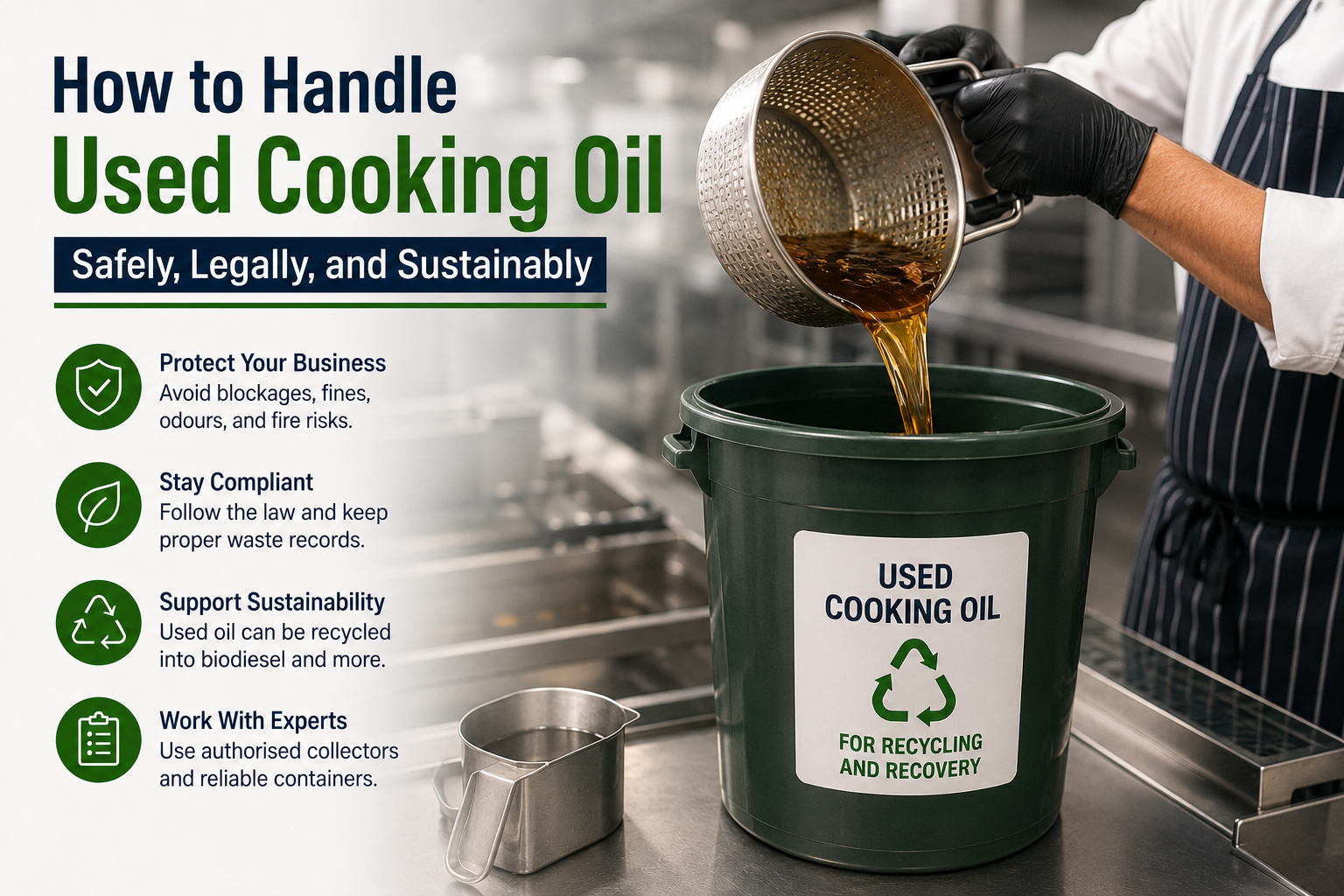
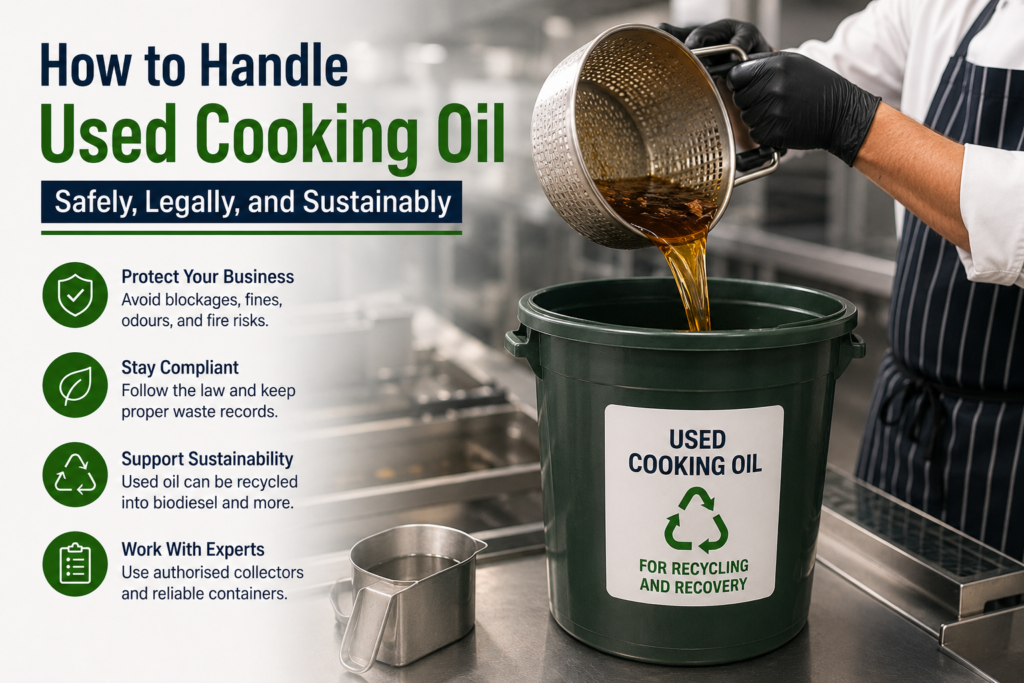
How to Handle Used Cooking Oil Safely, Legally, and Sustainably
For restaurants, cafés, takeaways, hotels, catering companies, and food production kitchens, fryer oil is more than a daily operating cost. Once it has reached the end of its useful life, it becomes a waste stream that must be handled correctly. Poor fryer oil disposal can block drains, damage plumbing, create unpleasant odours, attract pests, increase fire risk, and expose a business to regulatory problems. Managed properly, however, used cooking oil can become a valuable recyclable resource, often processed into biodiesel or other recovered products.
This guide explains how food businesses should manage waste fryer oil from the moment it leaves the fryer to the point it is collected by an authorised waste contractor.
Why Fryer Oil Disposal Matters
Commercial kitchens use large volumes of vegetable oil, rapeseed oil, sunflower oil, palm oil blends, and other frying fats. During service, oil breaks down because of heat, food particles, moisture, salt, and repeated use. When the oil becomes dark, foamy, smoky, sticky, or gives food an unpleasant flavour, it should be replaced.
The mistake some businesses make is treating old oil as a nuisance rather than a controlled waste material. Pouring oil into sinks, drains, toilets, yard gullies, or general waste bins is bad practice and can be expensive. Fats, oils, and grease, often called FOG, cool and harden inside pipework. They bind with food debris and other waste, causing blockages that can shut down a kitchen and require emergency drainage work.
Correct fryer oil disposal protects your drainage system, keeps your premises hygienic, supports compliance, and improves your environmental performance.
What Not to Do With Used Fryer Oil
Used cooking oil should never be poured down the sink or drain. It should not be mixed with detergents in an attempt to “wash it away”, because this simply moves the problem further into the drainage network. It should not be tipped onto the ground, into surface water drains, or into outdoor bins where leaks can contaminate the site.
Businesses should also avoid mixing waste fryer oil with engine oil, chemicals, cleaning products, water, food waste, or packaging. Mixed waste is harder to recycle, may be rejected by collectors, and can increase disposal costs.
A professional kitchen should have a clear internal rule: all used fryer oil goes into a dedicated, secure container and nowhere else.
Step-by-Step Process for Safe Oil Disposal
The best system is simple, repeatable, and easy for staff to follow.
First, allow the oil to cool to a safe handling temperature. Hot oil is a serious burn risk and can damage plastic containers. Staff should use suitable PPE where needed, including heat-resistant gloves and aprons.
Second, filter out food particles where practical. Crumbs and debris reduce oil quality and can make storage messier. Even if the oil is no longer suitable for frying, keeping it relatively clean helps with recycling.
Third, transfer the oil into a clearly labelled waste oil container. This container should be robust, leak-proof, closable, and positioned in a safe area away from heat sources, customer access, and heavy traffic.
Fourth, arrange collection by an authorised waste oil collector. The provider should be able to confirm that they are licensed or authorised to handle commercial waste oil and that the oil will be taken to a suitable recovery or disposal facility.
Finally, keep records. Restaurants and food businesses should maintain collection notes, waste transfer documentation, invoices, service schedules, and any grease trap maintenance records. Good documentation protects the business during inspections and helps managers track oil usage and waste volumes.
Choosing a Waste Oil Collection Provider
Not all collectors offer the same standard of service. When comparing providers, look beyond price. A reliable supplier should provide scheduled collections, emergency collections when required, clean containers, spill prevention support, proper documentation, and clear guidance for staff.
Businesses searching online for Waste Oil Collection Northern Ireland should check whether the provider covers their specific area, offers compliant collection for commercial kitchens, and can provide evidence of authorisation. Takeaways, fish and chip shops, hotels, and high-volume restaurants often need more frequent collections than small cafés.
Similarly, companies comparing waste oil collection ireland services should consider route coverage, container sizes, collection frequency, reporting, and whether the provider can collect from multi-site operations. For groups with restaurants in several towns or counties, consistent reporting and one point of contact can make compliance much easier.
The cheapest option is not always the best. Missed collections, leaking containers, unclear paperwork, or poor communication can create operational disruption and compliance risk.
Storage Best Practices for Used Cooking Oil
Storage is one of the most important parts of fryer oil disposal. Used oil should be kept in a dedicated container with a secure lid. The container should be clearly marked as used cooking oil or waste cooking oil. It should be placed on a stable surface and, where possible, stored in a bunded or protected area to reduce the risk of spills entering drains.
Do not overfill containers. Leave enough space to close the lid properly and move the container safely. If staff regularly struggle with heavy manual lifting, consider using a pump system, trolley, or larger external collection tank designed for commercial use.
The storage area should be inspected regularly. Managers should check for leaks, odours, pest activity, damaged lids, staining on the floor, and evidence that staff are putting the wrong materials into the oil container.
Grease Traps and Kitchen Drain Protection
Waste oil collection is only one part of FOG control. Food businesses should also prevent grease from entering the drainage system during washing and cleaning. Staff should scrape plates, trays, pans, and utensils into the correct food waste or general waste container before washing. Sink strainers should be used to catch solids, and these should be emptied into the appropriate bin.
Grease traps or grease interceptors can help capture fats, oils, and grease before wastewater enters the sewer. However, they only work if correctly sized, installed, cleaned, and maintained. A neglected grease trap can become a hygiene issue and may cause exactly the problems it was meant to prevent.
Keep written records of grease trap servicing, maintenance, and cleaning. These records are useful for internal audits, landlord requirements, insurer queries, and environmental inspections.
Training Staff to Handle Waste Oil Correctly
Even a good disposal system fails if staff do not understand it. Training should be practical and specific to the kitchen. Employees should know when oil must be changed, how to cool and transfer it safely, which container to use, what must never go down the drain, and who to inform when containers are nearly full.
New starters should be trained before they operate fryers or clean down the kitchen. Refresher training is useful after incidents, staff turnover, menu changes, or changes to collection arrangements.
Clear signage near fryers, sinks, and waste oil containers can reduce mistakes. A simple poster saying “No oil down the sink” can prevent costly drainage problems.
Environmental Benefits of Proper Oil Disposal
Used cooking oil is a recyclable resource when collected correctly. In many cases, it can be processed into biodiesel or used for energy recovery. This supports circular economy goals and helps food businesses reduce the environmental impact of their operations.
Proper disposal also reduces the risk of water pollution. When oil reaches drains, sewers, rivers, or soil, it can harm ecosystems and create expensive clean-up problems. For restaurants that promote sustainability, responsible fryer oil disposal is a practical action that supports credible environmental claims.
Common Warning Signs Your System Needs Improvement
Your waste oil process may need attention if containers are frequently overflowing, staff are unsure where oil should go, drains smell bad, sinks are slow to empty, grease trap cleaning is irregular, oil storage areas are dirty, or paperwork is missing.
Other warning signs include using open buckets, storing oil near hot equipment, mixing oil with food waste, or relying on ad hoc collections only when the kitchen has already run out of storage capacity.
A well-managed system should feel routine. Used oil should move from fryer to container to collector without mess, confusion, or emergency decision-making.
Practical Checklist for Restaurants
A strong fryer oil disposal process should include:
- A written procedure for changing, cooling, transferring, and storing oil.
- Dedicated, labelled, leak-proof containers.
- Regular collection by an authorised waste oil contractor.
- Waste transfer documentation and collection records.
- Staff training for fryer use, oil handling, and drain protection.
- Grease trap maintenance and recorded servicing.
- Clear signage near fryers, sinks, and storage areas.
- Regular checks by a manager or supervisor.
For multi-site food businesses, it is useful to standardise the same process across every location. This makes training easier and gives management better visibility over oil consumption, waste volumes, and supplier performance.
Final Thoughts
Fryer oil disposal is not just a back-of-house task. It is part of food safety, environmental responsibility, cost control, and legal compliance. Restaurants and food businesses that manage used cooking oil properly avoid blocked drains, reduce disruption, improve hygiene, and turn a difficult waste stream into a recoverable resource.
The best approach is straightforward: never pour oil down the drain, store it securely, use an authorised collector, maintain records, and train staff consistently. With the right process in place, waste oil management becomes a routine part of running a professional, responsible, and sustainable food business.