








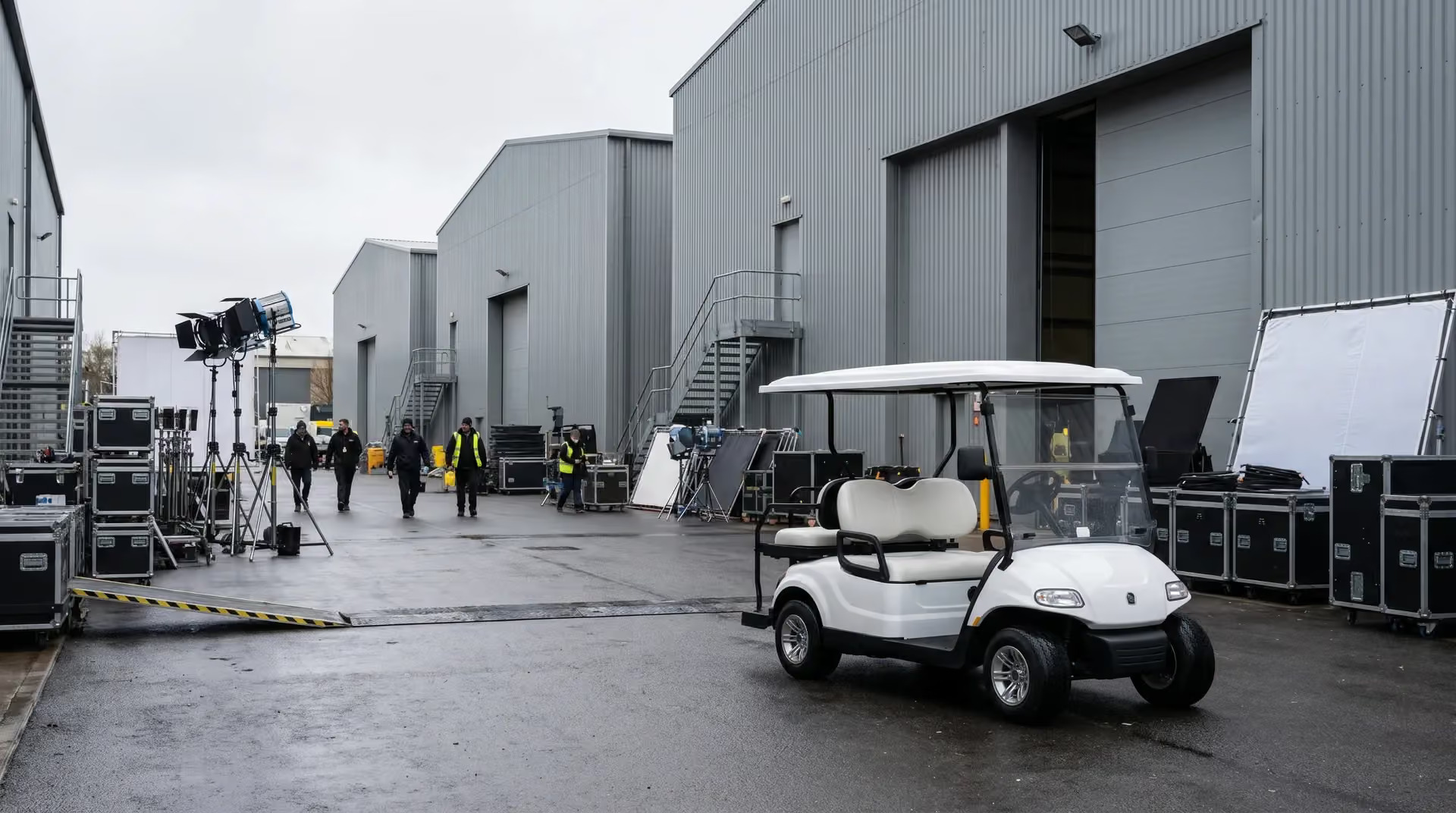
Every film set has two enemies: noise and time. A generator idling three hundred metres from a live microphone can ruin a take, and a lighting rig that arrives ten minutes late can cost a production more than the vehicle that carried it. This is why, on backlots and location shoots across the UK, the vehicle threading between departments is electric, often supplied by specialists such as Hawke Electric Vehicles.
The sound problem nobody outside the industry thinks about
Sound recordists fight for silence on set, and combustion engines are their oldest enemy. An electric buggy can move cast from the trailers to the set while cameras roll a hundred metres away, and the boom operator will never know. On night shoots in residential areas, where a production’s neighbourliness is part of its licence to operate, the difference between a diesel gator and a silent electric vehicle is the difference between complaints and quiet. Specialist film and TV buggy hire exists because productions discovered this years ago and never went back.
What a production fleet carries
The passenger work is obvious: cast in costume who cannot walk a muddy field, directors moving between the monitor and the set, executives on a visit day. The heavier work belongs to utility models: camera department cases, lighting stands, cable runs, catering resupply, art department set dressing. Studio complexes add a third duty, the daily commute of crew across sites so large that walking between stages eats the lunch break. A mixed fleet of people movers and electric utility vehicles covers all three without a fuel can on site.
Why hire fits the industry’s shape
Productions are temporary by nature: a shoot needs six vehicles for nine weeks and then needs nothing at all. Hire matches that shape exactly, with fleets delivered to the studio or location, sized to the call sheet, and collected at wrap. Art departments routinely rebrand or dress vehicles for period looks, and production offices appreciate the other quiet virtue of electric: no fuel receipts, no bowser on site, and charging overnight from the unit base supply.
The practical checklist for a locations manager
Book against the shooting schedule rather than the calendar, because prep and strike weeks need vehicles too. Map charging points at the unit base early. Ask for utility beds sized to your largest standard case, and at least one vehicle with weather protection for cast. And brief every driver that horses, children and live sets always have right of way. Small disciplines, but they are why some sets flow and others queue.
Filmmaking is the art of moving a small town to a field and making it look effortless. The electric buggy is one of the reasons it can be.