









Cataracts are one of the most common age-related eye conditions, but their impact on daily life can vary greatly from person to person. Some older adults notice mild glare or blurred vision for years, while others experience rapid decline that interferes with reading, driving, or recognizing faces. Accurate diagnosis is essential to understand not only whether a cataract is present, but how significantly it affects visual function and overall independence.
In geriatric care, cataract evaluation focuses on safety, functional vision, and long-term eye health rather than age alone. This approach ensures that diagnostic findings are interpreted in the context of the patient’s lifestyle, medical history, and visual demands.
Why Cataract Diagnosis in Older Adults Requires Special Attention
Aging eyes often have more than one condition at the same time. Alongside cataracts, seniors may also have macular degeneration, glaucoma, diabetic eye disease, or vascular changes affecting the retina. Because these conditions can overlap in symptoms, a structured diagnostic process is needed to determine which visual changes are caused by the cataract itself and which are due to other eye or systemic issues.
Multidisciplinary healthcare settings such as Liv Hospital emphasize comprehensive geriatric evaluation, ensuring that cataract diagnosis is integrated with the patient’s overall health rather than assessed in isolation.
Early Signs That Lead to Cataract Evaluation
Many older adults adapt gradually to vision changes without realizing how much clarity they have lost. Cataract evaluation is often triggered by subtle but persistent symptoms, including:
- Increased sensitivity to light or glare
- Difficulty seeing at night or in low-contrast environments
- Colors appearing faded or yellowed
- Frequent changes in eyeglass prescriptions
- Double vision in one eye
These symptoms do not always indicate immediate need for surgery, but they do signal that a thorough diagnostic assessment is appropriate.
Core Diagnostic Steps in Geriatric Cataract Evaluation
Cataract diagnosis begins with a detailed eye examination designed to assess both visual performance and eye structure. The process typically includes measurement of visual acuity, assessment of how light passes through the lens, and evaluation of the retina and optic nerve.
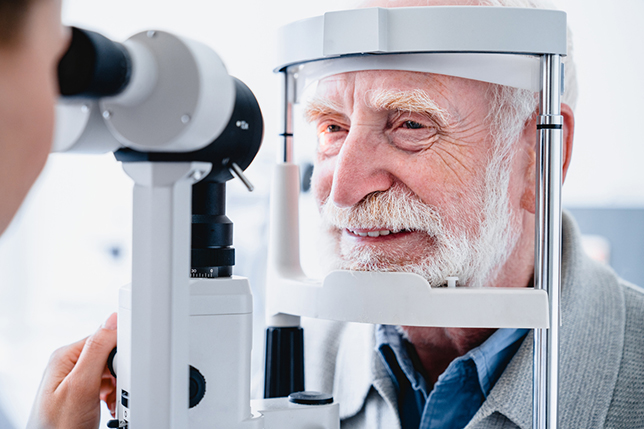
A slit lamp examination allows the ophthalmologist to view the lens layer by layer, identifying the location, type, and density of clouding. This information is crucial because a small central cataract may affect vision more than a larger peripheral one.
Understanding these findings in detail is central to GERIATRICS Cataract Diagnosis and Evaluation, where diagnostic decisions are guided by both clinical measurements and real-world visual impact.
Advanced Testing: Looking Beyond the Lens
When cataracts are dense or when other eye conditions are suspected, additional diagnostic tools may be used. Retinal imaging ensures that vision loss is not being caused by underlying retinal disease that could limit visual improvement after cataract treatment. Eye ultrasound may be used if the lens opacity prevents clear visualization of internal eye structures.
Another critical step is ocular biometry, which measures the eye’s length and corneal curvature. These measurements are essential for future planning, as they determine the appropriate power of an intraocular lens if cataract surgery is eventually needed.
Functional Vision Matters More Than Numbers
In geriatric care, diagnostic results are interpreted alongside the patient’s daily experience. A moderate cataract on examination may still justify intervention if it interferes with safe mobility, reading medication labels, or maintaining independence. Conversely, a visually significant cataract on imaging may not require immediate action if the patient remains comfortable and functional.
This functional approach helps avoid both unnecessary procedures and unnecessary delays, aligning diagnosis with quality of life rather than test results alone.
Cataract Evaluation and Overall Health
Systemic health plays an important role in cataract diagnosis. Conditions such as diabetes, cardiovascular disease, and long-term medication use can influence both cataract progression and eye health. For this reason, geriatric cataract evaluation often includes a review of medical history, medications, and general health status to ensure that visual findings are interpreted accurately.
This integrated assessment supports safer decision-making and better long-term outcomes for older adults.
Supporting Eye Health in Everyday Life
While clinical evaluation determines the presence and impact of cataracts, everyday habits also influence visual comfort and eye health. Managing lighting at home, protecting eyes from excessive glare, and maintaining regular eye examinations all support long-term vision stability.
Broader lifestyle approaches to aging well, including routines that support sensory health and overall well-being, are often discussed in wellness-focused spaces such as live and feel, where vision health is considered part of a balanced, independent life rather than a standalone medical issue.